THE RATE
A watt is how fast
The power rating says how quickly an appliance uses electricity. A typical kettle is rated at 3,000 W.
Do the sum doodlewatts
YOUR ENERGY BILL, EXPLAINED
Your bill counts kilowatt-hours, not watts. Here is how to get from one to the other.
Every appliance has a power rating in watts. Run it for a while and it uses kilowatt-hours, and that is what your supplier charges for. Once you can do that sum, you can see where the money goes.
Plain English, with UK sources linked.
kWh not just W
Try the cost checkTHE SHORT ANSWER
Kilowatts times hours gives kilowatt-hours,
and kilowatt-hours are what you pay for.
THE RATE
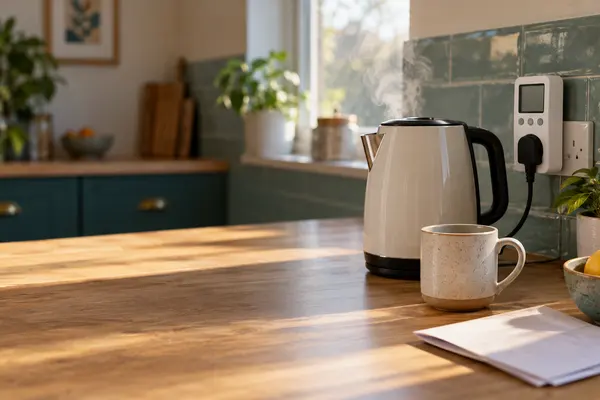
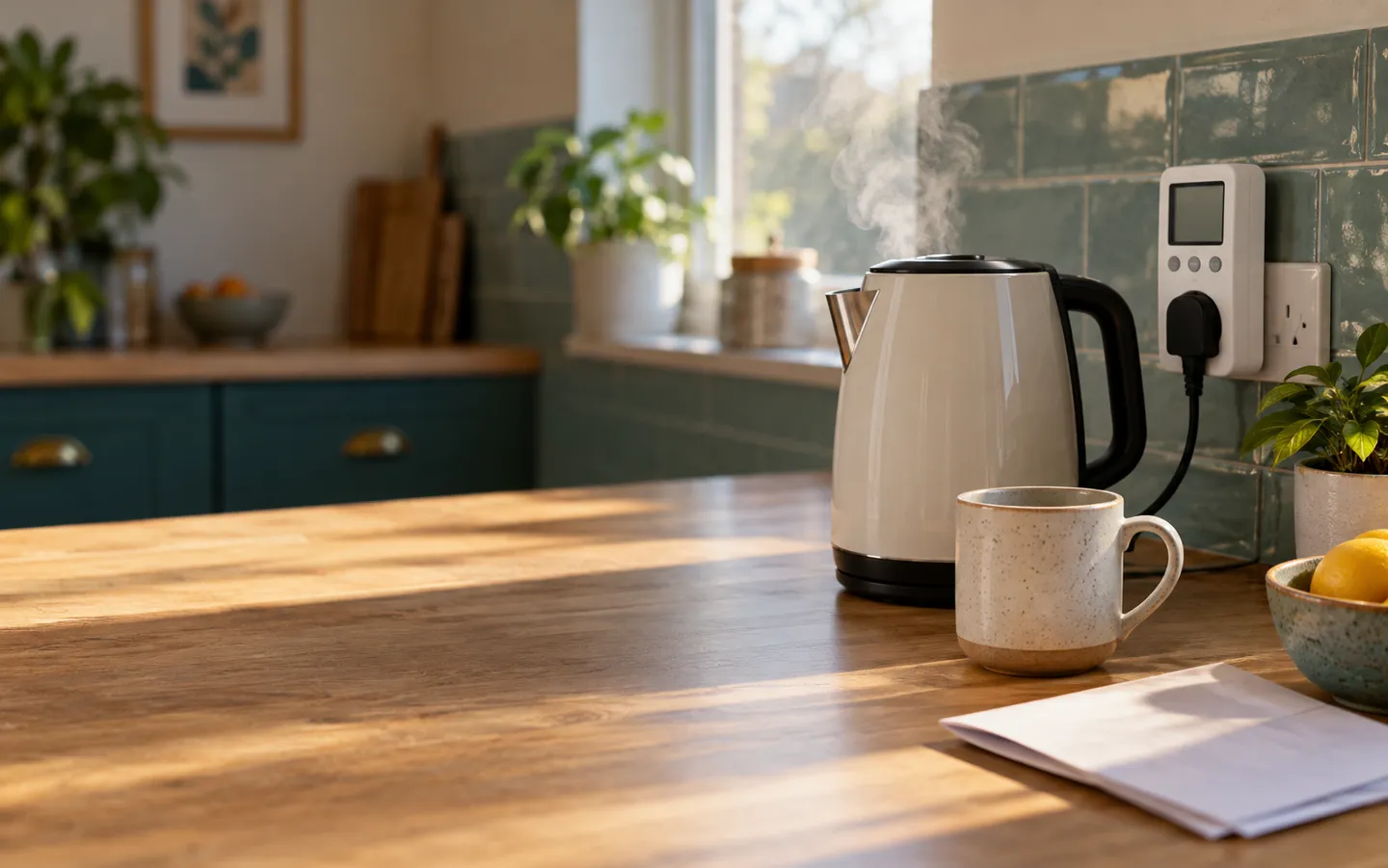
The power rating says how quickly an appliance uses electricity. A typical kettle is rated at 3,000 W.
Do the sumTHE AMOUNT
One kilowatt-hour is 1,000 watts for one hour. Your bill multiplies your kWh by the unit rate.
Read your billTHE QUIET ONE
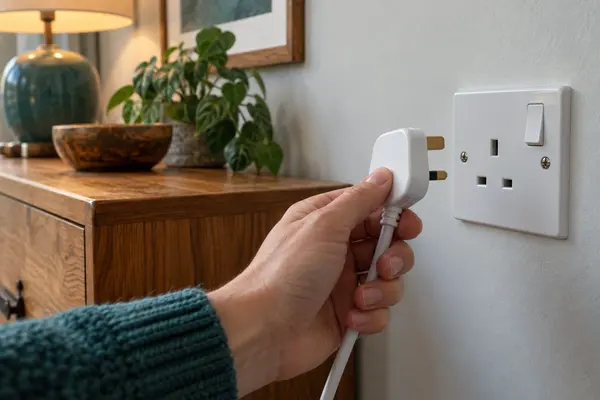
A small draw all day, every day becomes real kWh over a year. Switching off at the plug helps.
Cut the waste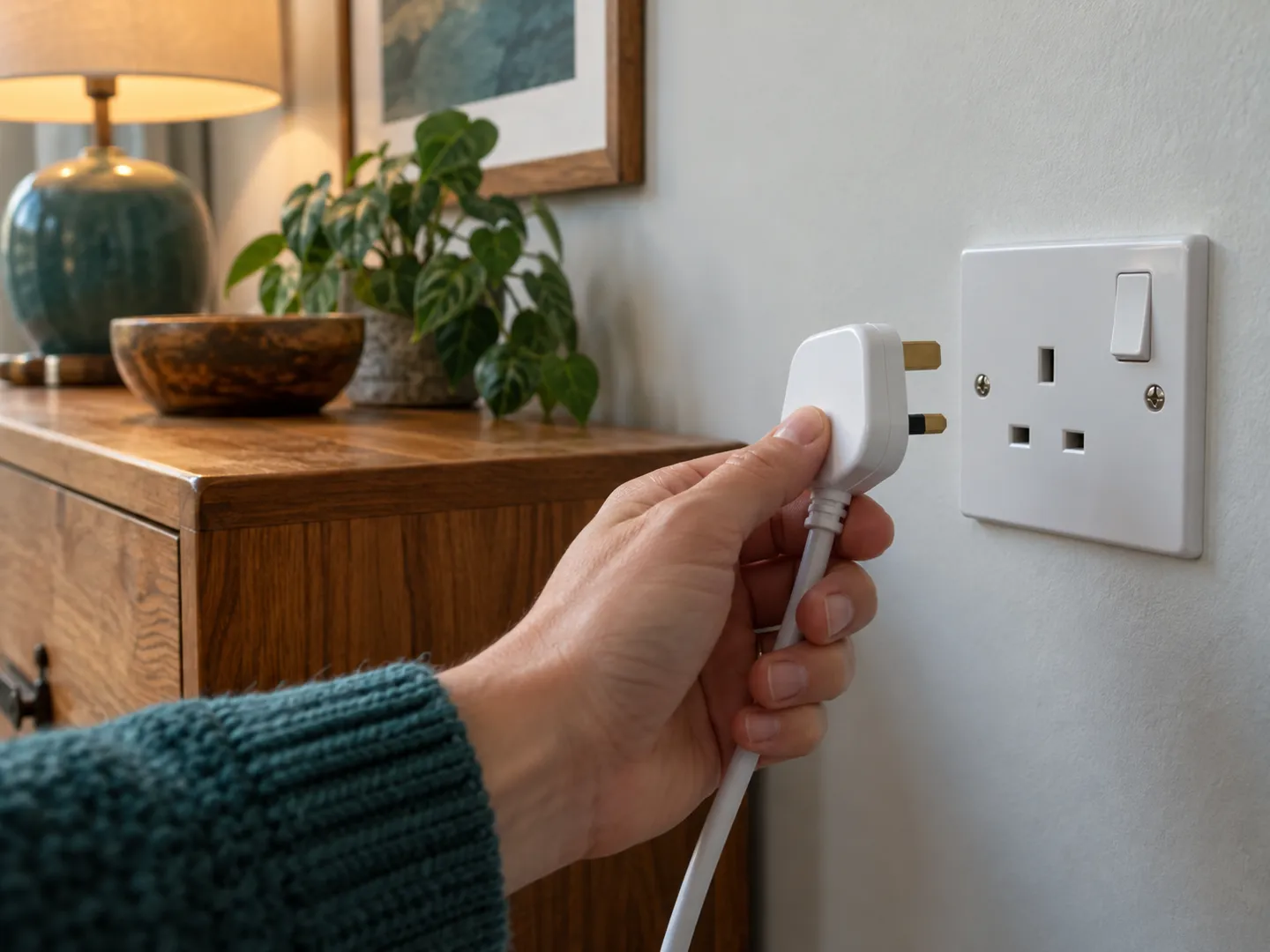
CUT THE WASTE
Look for the watts (W) or kilowatts (kW) on the label or in the manual. That is the number you need for the sum.
Most devices keep their settings when switched off at the wall. Leave on anything that needs to record, and always fridges and freezers.
Filling the kettle for just the cups you want saves around £10 a year in Great Britain, says the Energy Saving Trust.
Find the pence per kWh and the daily standing charge on your bill, then redo the sums with your real numbers.
TWO NUMBERS WORTH KNOWING
One tells you where you stand.
The other tells you what is easy to cut.
2,500 kWh
Typical home, electricity per year
Ofgem now describes medium use as 2,500 kWh of electricity a year, down from 2,700 kWh, to reflect falling consumption. Ofgem says the change itself does not affect anyone's bill.
OFGEM · FROM 1 JULY 2026
~£45 a year
Switching appliances off standby
The Energy Saving Trust estimates around £45 a year in Great Britain (£55 in Northern Ireland) from switching appliances off at the plug instead of leaving them on standby.
ENERGY SAVING TRUST · 2026
Divide 2,500 kWh by 365 and a typical home uses just under 7 kWh a day: the same as nearly seventy two-minute boils of a 3,000 W kettle.
A QUICK COST CHECK
Pick an example. The sum is always the same: kilowatts × hours = kWh, then kWh × your unit rate.
Costs use 25p per kWh only to illustrate, the example rate Citizens Advice uses. Check the unit rate on your own bill; it may be higher or lower.
BILL FACTS
Citizens Advice puts it simply: the unit rate is the price you pay per kilowatt-hour of electricity you use.
Ofgem describes the standing charge as a fee you pay each day, even if you do not use any energy that day.
The cap limits the unit rate and standing charge, not your total bill. Ofgem sets the level every 3 months.
From 1 July 2026 Ofgem's typical figures assume 2,500 kWh of electricity a year, down from 2,700 kWh.
A 2012 government field trial monitored 251 homes and found products left plugged in or on standby cost the UK up to £1.3 billion a year.
QUICK QUESTIONS
Short answers to the questions people ask most.
A watt measures how fast an appliance uses electricity, its power rating. A kilowatt-hour (kWh) measures how much electricity is used in total: 1,000 watts running for one hour. Your bill charges you per kWh.
Divide the power rating in watts by 1,000 to get kilowatts, multiply by the hours it runs to get kWh, then multiply by the unit rate on your bill. A 3,000 W kettle boiling for 2 minutes uses 0.1 kWh.
Since 1 July 2026 Ofgem describes a typical home with medium use as using 2,500 kWh of electricity a year. Before that it used 2,700 kWh. Your own use may be higher or lower.
No. Ofgem says the cap is the maximum a supplier can charge for a unit of energy and the standing charge. It does not limit your total bill: the more energy you use, the more you pay. Ofgem sets it every 3 months.
The Energy Saving Trust estimates you could save around £45 a year in Great Britain by switching appliances off standby. Check the instructions first: some recorders need to stay on, and fridges and freezers must stay on.
Updated
A NAME WITH SPARK
doodlewatts.com is part of the DoodleSale portfolio. It isn't in an auction right now, but you can ask about leasing it.